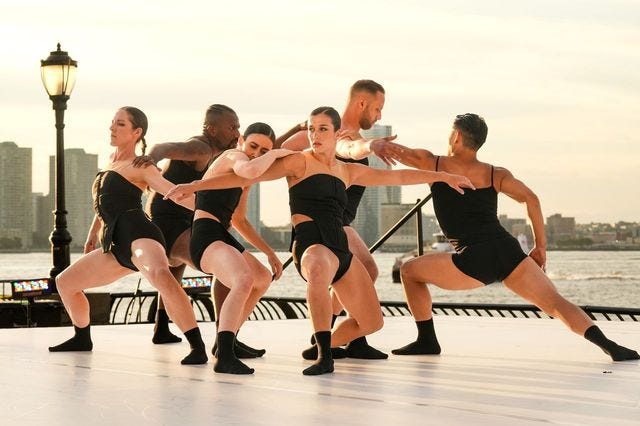
Distance / decay / by Pioneers Go East Collective
Anabella Lenzu, choreographer/performance artist
Gian Marco Riccardo Lo Forte, director & filmmaker
LaMama Experimental Theatre Club
New York, New York
May 8, 2026
--- By Tom Phillips
In the unlikely event that women ever achieve equal rights in America, someone should put up a statue of Anabella Lenzu. In her new solo, she dances the full scope of humanity in female form.
Distance /decay / begins in captivity. To a sound track of solitary, sad poetry by the late Argentine feminist Alejandra Pizarnik, Lenzu adds the scratch of a live microphone on her tight sequined party dress. She circles her breasts and digs into her belly, searching for the life within. She strips off the glitz, down to a leotard and bare legs, but then has to tear up a series of pictures and diagrams that cover her torso and face. Gaining strength with each false image that falls to the floor, Lenzu picks up a huge megaphone, shouts into it, but abruptly gives up and covers her head with it.
What follows is a demonstration of the power of dance drama. Lenzu dons a deep red cape and performs a slow, fierce tango. Then she straps her legs like a Roman gladiator and marches with soaring battements across the stage, slashing the air with her cape like a bullfighter. Rocked back in our seats, struck dumb, we watch as she exits and a minute later returns with a sweet smile and a modest bow—once again a mother, teacher, artist and friend..
A double immigrant from Argentina and Italy, Lenzu radiates the warrior ethos of ancient Rome and the steely dignity of flamenco and the bull ring, without losing a drop of her maternal warmth and intelligence. Grazie, Anabella. We get it.